Becoming Human Again
Why Incarnationality Matters in the Catholic Church Right Now

The Backdrop
I’m a “cradle Catholic.”
I was raised in the Church. I went to Catholic schools, charismatic youth group. I had a stint in traditional minor seminary. Our family prayed the rosary together every night. Our parents genuinely loved Jesus and supported us in so many ways to know Him too. I went on mission trips in college. I led. I served. I did all right things on paper.
And there was real goodness there.
There was beauty.
There was sincerity.
There was sacrifice.
There was faith.
Which I am so grateful for.
But all of it unfolded within the atmosphere of suffering relationships, generational trauma, emotional suppression, addictions, emotional invalidation, and emotional neglect.
No one meant for it to happen that way.
But it still shaped me.
It became the emotional and relational backdrop through which I internalized both my identity and my faith.
So as I grew older, I learned how to survive.
I learned how to overthink instead of feel.
How to perform instead of receive.
How to spiritualize instead of grieve.
How to analyze instead of attune.
How to disconnect from my gut, my body, my emotions, my needs, and my relationships in order to keep functioning.
And the strange thing is:
I was often praised for it.
I looked devoted.
Disciplined.
Thoughtful.
Capable.
“Holy.”
But underneath much of that was exhaustion, fear, dissociation, loneliness, and nervous system survival.
I was trying to use the tools of the Church as best as I could.
But I was using them with bruised hands, a broken heart, and an overperforming head.
And over time, I started realizing I was not alone.
The Crisis I See in American Catholicism
I began noticing similar patterns everywhere around me in American Catholic culture.
People starving for meaning.
People desperate for certainty.
People drowning in information but disconnected from themselves.
People obsessed with theology but terrified of vulnerability.
People hyperaware of morality but unable to feel safe in relationship.
People who could explain God beautifully while remaining deeply disconnected from their own bodies, emotions, limits, and humanity.
And I think we are living at a moment in history where this matters profoundly.
Because many people are returning to the Church right now.
And that is beautiful.
But if we are not careful, we can unintentionally baptize nervous system dysregulation, emotional avoidance, and relational wounding into “discipleship.”
We can mistake hypervigilance for holiness.
Rigidity for virtue.
Intellectualization for wisdom.
Emotional suppression for purity.
Overcontrol for surrender.
And, furthermore, I think modern American culture makes this even harder.
Technology.
AI.
Digital addiction.
Pornography.
Chronic nervous system activation.
Loneliness.
The collapse of local community.
The loss of embodied presence.
The search for identity and belonging.
All of this intersects with how many Catholics are trying to live and heal today.
And I see the effects everywhere.
In dating relationships that cannot tolerate ambiguity or emotional intimacy.
In marriages marked by emotional distance.
In men who can articulate Thomistic philosophy but cannot identify sadness in their own body.
In women carrying enormous spiritual responsibility while living in chronic exhaustion.
In priesthood and religious life where burnout and emotional isolation quietly accumulate beneath sincere devotion.
In healing spaces where people endlessly “process” themselves but struggle to actually feel safe enough to rest, receive, or connect.
Even many good healing modalities can accidentally reinforce this.
The on-trend “Internal Family Systems” model (which I actually love and integrate into my clinical practice), can become another form of over-analysis if they are not grounded in embodiment and relationship.
Christian inner healing spaces can unintentionally lack containment, pacing, or nervous system safety.
Intellectual Catholic spaces can sometimes overvalue certainty while undervaluing tenderness, grief, play, creativity, emotional presence, and receptivity.
Christianity Is Incarnational
And all this matters because Christianity is incarnational. Inherently. Period.
“The Word became flesh and dwelt among us.” (John 1:14)
Not abstraction.
Not escape.
Not disembodied perfectionism.
Flesh.
Christianity is not fundamentally a religion of escape from the body.
It is a religion of transfiguration through the body.
The Incarnation reveals something staggering about reality:
that the human body is not an obstacle to communion with God, but a potential place of encounter with Him.
God did not save us from embodiment.
He entered into it.
This means our emotions, nervous systems, relational wounds, desires, exhaustion, and even our psychological suffering are not irrelevant to spiritual life.
They are part of the terrain through which grace moves.
This does not mean every feeling is morally authoritative.
Nor does it mean biology determines morality.
The Church rightly warns us against reducing the person to impulse or emotion alone.
But many modern Catholics have swung toward the opposite danger:
treating emotions, embodiment, vulnerability, and psychological suffering as spiritually suspicious rather than spiritually informative.
Yet throughout Scripture, God continually speaks through embodied experience.
Through trembling.
Through tears.
Through longing.
Through fatigue.
Through desire.
Through grief.
Elijah collapses beneath the broom tree in despair before God ministers to him through rest, food, touch, and gentle presence. (1 Kings 19)
David cries:
“My frame was not hidden from you when I was made in secret.” (Psalm 139)
Christ Himself weeps, sweats blood, withdraws to rest, longs for companionship, and suffers abandonment within His own body.
The Incarnation does not erase humanity.
It reveals its dignity.
And I think many of us are starving for a spirituality that helps us become human again.
Not less spiritual.
More integrated.
More alive.
More relational.
More grounded.
More capable of both truth and tenderness.
When the Nervous System Learns Fear
Because doctrine matters.
Knowledge matters.
Structure matters.
Asceticism matters.
Ritual matters.
But without safety, attunement, love, and relational repair, even beautiful truths can become filtered through fear.
And when fear dominates the nervous system, people often become more rigid, obsessive, disconnected, performative, compulsive, avoidant, or emotionally shut down.
This is part of why I think so many people feel trapped in cycles of anxiety, scrupulosity, compulsions, burnout, loneliness, or shame even while sincerely pursuing God.
Their bodies are still carrying histories of survival.
When I use the word trauma, I am not merely referring to dramatic events alone.
Trauma can certainly include abuse, violence, catastrophe, betrayal, or severe neglect.
But trauma research increasingly shows that trauma is also about what happens inside a person when overwhelming experiences exceed their capacity to process or safely navigate what is happening.
In many ways, trauma is less about the event itself and more about the lingering adaptations that remain afterward.
The body remembers what the mind may try to forget.
How? In…
Hypervigilance.
Chronic anxiety.
Dissociation.
Emotional numbness.
Perfectionism.
People pleasing.
Shame.
Compulsive behaviors.
Difficulty resting.
Difficulty trusting.
Difficulty receiving love.
These are not always signs of simple moral failure.
Often they are intelligent survival strategies.
The nervous system learns patterns of protection in the absence of enough safety, attunement, nurturance, or secure attachment.
And over time, those patterns become embodied.
This is why Saint Paul can say:
“I do not do the good I want, but the evil I do not want is what I do.” (Romans 7:19)
The human person is not merely “thinking wrongly.”
The whole person becomes conditioned relationally, emotionally, spiritually, and physiologically over time.
And this is precisely why healing must also become relational, embodied, spiritual, and experiential, not merely informational.
The Inner World: Attachment, Parts, and Communion
Attachment theory and parts psychology have been especially helpful for me in understanding how the human person longs for communion while simultaneously protecting against vulnerability.
Many Catholics become nervous when they hear “parts work,” imagining fragmentation or multiple personalities.
But in many ways, parts language simply gives us a compassionate framework for understanding the inner divisions Saint Paul himself describes:
“For I do not do what I want, but I do the very thing I hate.” (Romans 7:15)
One part longs for intimacy.
Another fears rejection.
One part desires holiness.
Another compulsively seeks comfort.
One part trusts God.
Another feels abandoned.
Parts psychology helps us understand that many internal conflicts are not signs that we are fundamentally broken beyond repair, but signs that different aspects of ourselves learned different survival strategies in response to suffering.
And often these parts carry burdens that were formed in relationships long before we had language for them.
This is where attachment research becomes illuminating.
The child learns what love feels like through relationship.
Through tone of voice.
Facial expression.
Touch.
Presence.
Attunement.
Repair.
And relational neuroscience now shows what the Church has always intuited:
that we are formed in communion.
Our nervous systems are shaped in relationship and healed in relationship.
This is why shame isolates.
Why compassion softens defensiveness.
Why safe presence changes people more deeply than argument alone.
We become like what we consistently behold and experience relationally.
What Somatics Actually Is
This is also why somatic practices can be so helpful when properly integrated within a faithful Christian understanding of the person.
I define “Somatics” here as simply the study and practice of relating to the lived experience of the body.
It involves learning how to notice sensations, tension, breath, posture, impulses, emotions, activation, numbness, and nervous system states with greater awareness and compassion... in whatever context (therapy, prayer, daily life, etc.).
Not worshipping the body.
Not idolizing feelings.
Not abandoning reason.
But becoming more present to the reality of how God designed the human person as an integrated unity of body, mind, and soul.
In many ways, somatic work is not about becoming less spiritual.
It is about becoming embodied enough to be more spiritual by remaining present to reality.
Because many people do not actually know when they are anxious.
Or dissociated.
Or emotionally flooded.
Or shut down.
Or operating from fear.
Their body knows.
But they have lost conscious relationship with it.
And if grace builds upon nature, then learning how to gently attend to the body can become part of learning how to cooperate with grace itself.
Especially because the nervous system profoundly affects our capacity for prayer, discernment, vulnerability, intimacy, attention, receptivity, and relationship.
A chronically dysregulated nervous system often struggles to perceive safety, receive love, tolerate stillness, or remain present long enough for deeper integration to occur.
This is why merely “trying harder spiritually” is often insufficient for many wounded people.
Not because spirituality is insufficient.
But because the person attempting to receive it may still be operating from survival.
Safety, Surrender, and the Love of God
I increasingly believe many people cannot fully surrender to God because they have never experienced enough safety to remain present long enough to receive love.
Not merely intellectually.
But experientially.
Their bodies learned vigilance before trust.
Performance before rest.
Fear before communion.
And so healing often involves slowly teaching the body what the soul has long professed:
that love is real,
that relationship can be safe,
that vulnerability does not always end in abandonment,
that weakness is not disgusting,
that needs are not shameful,
that we do not have to earn our existence.
This is where incarnationality matters so deeply.
Incarnationality means God communicates not only through ideas, but through lived reality.
Through relationship.
Through the body.
Through emotion.
Through desire.
Through grief.
Through exhaustion.
Through the nervous system itself.
Not because biology is God.
But because grace builds upon nature.
Our interior lives are not obstacles to spirituality.
They are often the very place where God is waiting for us.
And this changes how we approach healing.
Instead of trying to aggressively fix ourselves, overpower ourselves, or spiritually bypass ourselves, we begin learning how to safely accompany ourselves.
We learn how to slow down.
How to notice.
How to stay present.
How to tolerate vulnerability.
How to listen.
How to receive care.
How to allow emotion without drowning in it.
How to remain connected to God, ourselves, and others simultaneously.
And paradoxically, the safer the body becomes, the more capable we often become of genuine surrender to God.
Because surrender is not the same thing as collapse.
And peace is not the same thing as numbness.
Real surrender requires enough groundedness to remain present in reality.
The Invitation Before the Church
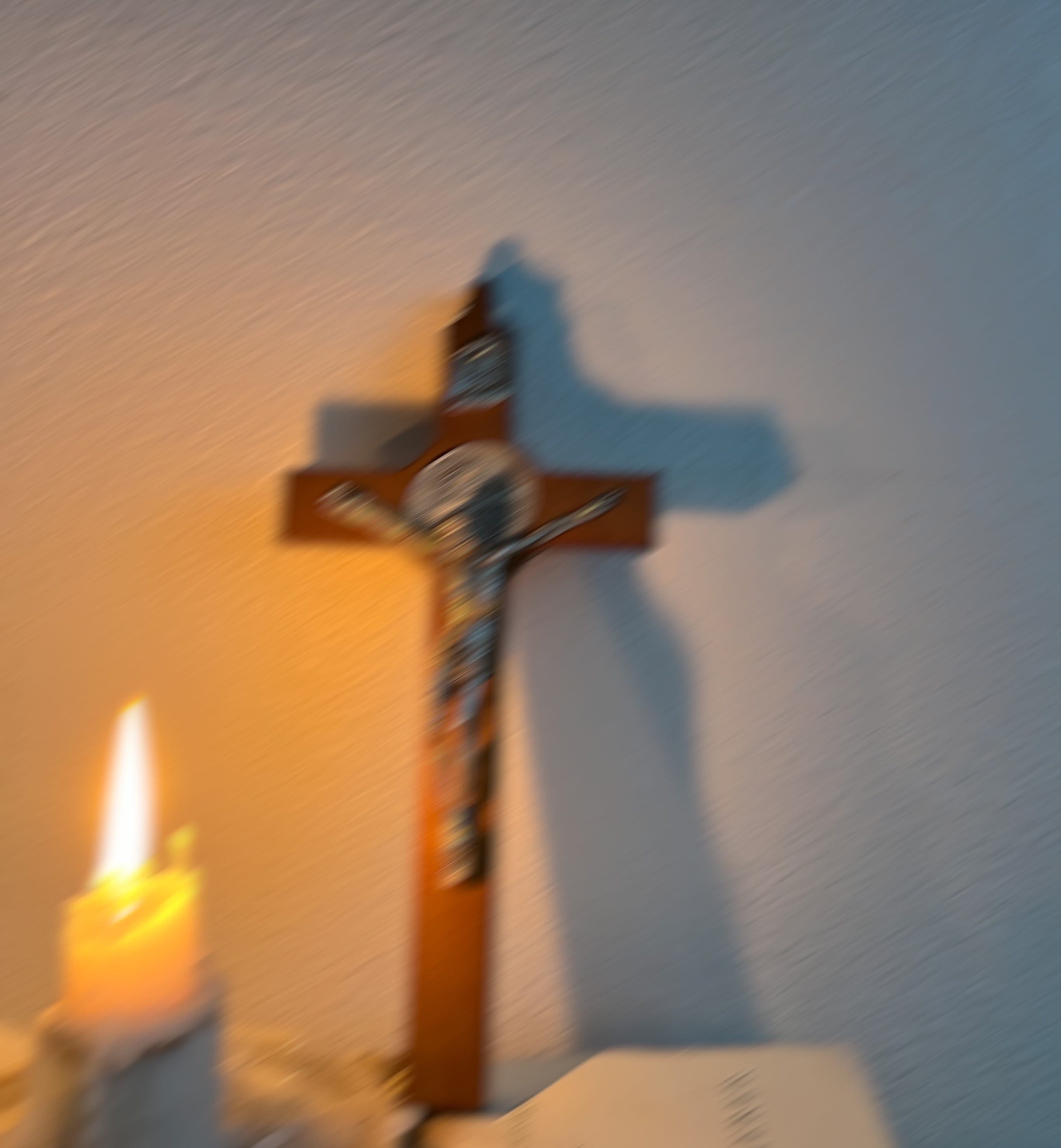
I think this is part of the invitation before the Church right now.
Not to abandon tradition.
But to embody it more deeply.
To become people who can hold both conviction and compassion.
Truth and tenderness.
Structure and flexibility.
Mystery and groundedness.
Prayer and embodiment.
Holiness and humanity.
Because the Incarnation reveals that God is not repelled by our humanity.
He enters it.
Fully.
And perhaps healing begins when we finally allow ourselves to do the same.
What now?
If something in this letter resonated with you, and you’d like a more experiential introduction to this work, I created a free program called Coming Home.
It includes roughly five hours of teaching and guided somatic practices designed to help you gently reconnect with your body, nervous system, emotions, and relationship with God through an incarnational lens. You can move through it over five days, five weeks, or at your own pace.
The goal is not self-absorption or endless introspection.
It is learning how to become more grounded, present, receptive, relational, and integrated in your daily life with God and others.
If you feel ready for deeper live support, you’re also welcome to reach out for availability. I’ve walked the walk and have been accompanying others in their walk too.
For those in California, I practice at the Catholic Therapy Center of California where I offer:
Individual trauma therapy
Group therapy
Faith-integrated, body-centered healing work
For those outside California, I also offer non-clinical spaces such as:
Somatic movement and prayer circles
Mentorship containers
Educational and experiential workshops focused on embodiment, nervous system healing, and incarnational spirituality
You can learn more about all these offerings, or reach out here:
Or email me directly:
letsconnect@healingwithkolbe.com
And I’d love to get an email or message from you. It’s so helpful for me when I read your questions, or where you’re feeling stuck on something you read, or what else you’d like to read about from me in this space.
Finally…
I don’t write any of this as someone who has arrived, but as someone still learning how to become more present, receptive, grounded, and human in Christ.
I believe many of us are exhausted from trying to think, perform, or control our way into peace. And I believe Christ continues to meet us there.
Perhaps part of the renewal needed in the Church right now is a deeper return to incarnation: to relationship, embodiment, humility, and love.
Thank you for reading…
and allowing me to share part of my heart with you.
With love,
Kolbe
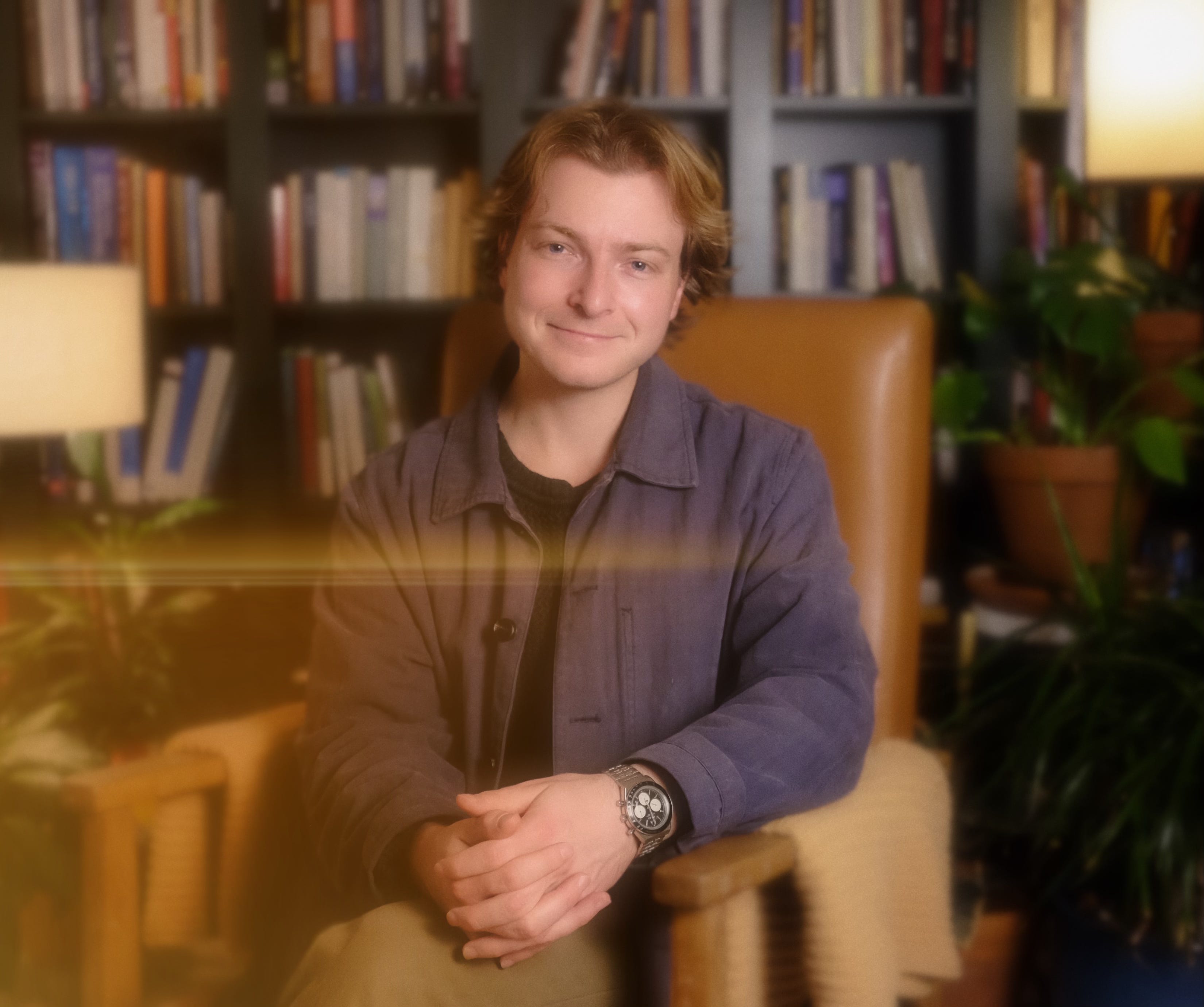
Kolbe Young is a Catholic husband, father, psychotherapist, and facilitator passionate about helping individuals and communities reconnect to what is most real. Shaped by both his lived experience and clinical work at the intersection of trauma, neuroscience, psychology, and spirituality, Kolbe offers a compassionate and practical approach to the struggles that keep us stuck and distant from the life God desires for us in the here and now.
He holds degrees from Franciscan University of Steubenville and Divine Mercy University and currently practices at the Catholic Therapy Center. He is also exploring innovative ways to bring an incarnational vision of healing into daily practice for Christians everywhere. Known for his warmth, creativity, and contemplative depth, Kolbe invites communities into a grounded and hopeful understanding of restoration in Christ.
Outside the office, you can usually find him barefoot serving coffee, enjoying music, or playing with his family.